
What Is a Structured Cabling System?
A Structured Cabling System is a standardized, organized cabling infrastructure that supports multiple technologies on one clean backbone—such as data networking, voice, video, access control, CCTV, Wi-Fi, intercoms, and smart building systems. Instead of installing separate wiring for every new device or department, structured cabling provides a single, planned framework that works across your entire property.
Think of it as the “road network” of your building’s IT. If the road network is chaotic, every new connection becomes slow and costly. But with a structured cabling design, adding a new office, expanding your CCTV coverage, upgrading Wi-Fi, or moving departments becomes straightforward because everything is already mapped, labeled, and routed properly.
In Dubai, structured cabling is especially important because modern buildings often combine high-density offices, smart access control, high-resolution surveillance, IP telephony, and cloud-first workflows. A structured cabling system ensures all of these run reliably with minimal downtime and easier maintenance.
Structured Cabling vs Traditional “Point-to-Point” Cabling
Traditional cabling is usually done “as needed.” A new team arrives, someone pulls random cables. Later, CCTV gets added, more cables are pulled. Then access control is installed, and more wiring appears. Over time, your network room becomes a mess, troubleshooting becomes difficult, and even small changes require expensive rework.
Structured cabling is different. It follows a planned architecture: cables are routed through defined pathways, terminated on patch panels, connected through switches, and labeled with proper documentation. This gives you a predictable, scalable system that stays clean even after upgrades.
Why Structured Cabling Matters in Modern Networks
Modern networks are no longer just for internet and email. Today, your cabling system may carry: cloud app traffic, VoIP calls, video conferencing, IP CCTV streams, biometric access control logs, IoT sensors, smart meeting room systems, POS terminals, and building automation data.
Without structured cabling, the network becomes fragile. Common issues in unstructured environments include random cable lengths causing signal loss, poorly crimped terminations creating packet drops, interference near power lines, and unlabeled cables that make troubleshooting slow and expensive.
Key business benefits you actually feel
- Higher uptime: fewer faults, fewer “mystery disconnects,” better signal stability.
- Faster troubleshooting: labeled patch panels + documented routes = quick isolation of issues.
- Better performance: correct cable categories and terminations support high throughput and low latency.
- Scalability: add new users, cameras, APs, and access doors without ripping out existing wiring.
- Cleaner IT rooms: proper cable management improves airflow and reduces equipment overheating.
- Professional compliance: easier to meet enterprise policies and audits, especially in regulated industries.
Core Components of a Structured Cabling System
A structured cabling system isn’t just “cables.” It is a complete ecosystem made up of connecting hardware, pathways, labeling, racks, and termination points. When these are designed together, you get a cabling system that stays stable for years.
Patch Panels
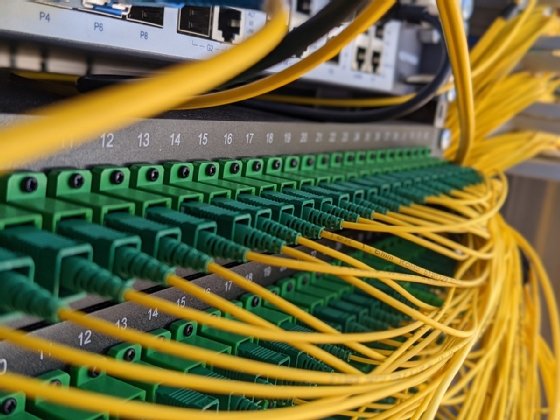
Patch panels are the organized termination points where horizontal cables from work areas land. Instead of crimping network cables directly into switches (which becomes messy and risky), you terminate the building cabling on patch panels, then connect patch cords from the panel to the switch.
- Cleaner changes: you move devices by changing patch cords, not re-terminating building cables.
- Safer maintenance: switches can be replaced without touching permanent cabling.
- Better documentation: each port can be labeled and mapped to a specific outlet or camera.
Network Switches
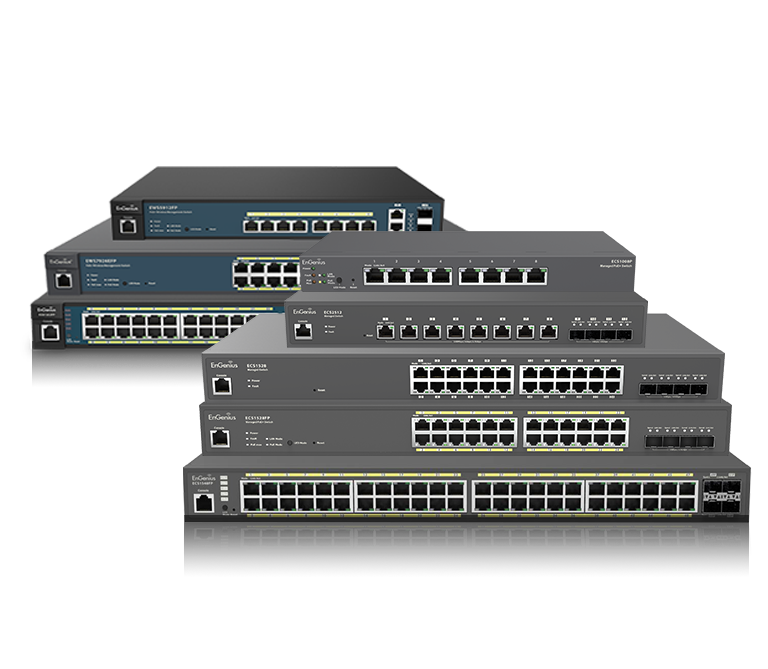
Switches distribute connectivity to end devices—PCs, printers, access points, IP phones, CCTV cameras, access control controllers, and more. In structured cabling, switches are placed in racks within an equipment room (ER) or telecom room (TR) and connected through patch panels.
This layout matters because it reduces confusion and ensures upgrades are painless. For example, moving from a 1G switch to a 10G uplink switch becomes easy if cabling and patching are clean.
Trunk Cables, Backbone Links, and Cable Management
Trunk cables bundle multiple copper or fiber runs together for neat routing between racks, panels, and pathways. Backbone cabling connects floors, rooms, and sometimes separate buildings. Proper cable trays, conduits, ladders, and vertical managers keep everything organized and protect cables from damage.
In Dubai’s hotter environments, clean cable management isn’t just “nice to have.” It improves airflow in server rooms and reduces heat buildup around switches and patch panels.
Types of Cables Used in a Structured Cabling System
Choosing the correct cable type is where many businesses make mistakes. The right choice depends on: device type (Wi-Fi, CCTV, data), distance, bandwidth requirement, interference risk, and future upgrades. Below are the most common cabling types used in modern structured cabling projects.
Fiber Optic Cabling
Fiber optic cabling transmits data as light rather than electricity. This gives it two massive advantages: extremely high bandwidth and long-distance transmission without performance drop. Fiber is ideal for backbone cabling between floors, data centers, campuses, and high-performance server environments.
- Best for: backbone links, data centers, multi-floor buildings, inter-building connectivity.
- Strengths: long-distance, high bandwidth, immune to EMI, reliable for future expansion.
- Typical types: Single-mode (long distance) and Multi-mode (shorter but high capacity).
Twisted Pair Cabling (Copper Ethernet)
Twisted pair cabling is the most common choice for horizontal cabling to desks, cameras, access points, and IP phones. These include Cat5e, Cat6, Cat6A, and Cat7 (and in some cases Cat8 for specialized areas). The “category” matters because it affects bandwidth support, noise immunity, and future readiness.
- Cat5e: still common, supports 1G reliably, cost-effective for basic networks.
- Cat6: better performance and noise handling, strong choice for modern offices.
- Cat6A: supports 10G over longer distances, recommended for new builds and future-ready networks.
- Cat7/Cat8: niche deployments, often used where shielding and high bandwidth are required.
Coaxial and Legacy Cabling
Coaxial cables are common in older CCTV deployments and TV distribution systems. Telephone wire (POTS cabling) is used for legacy phone systems, fax lines, and certain alarm circuits. In modern structured cabling environments, these legacy cables are typically minimized, but they still appear in retrofits or buildings with existing infrastructure.
Many Dubai businesses upgrade from coax CCTV to IP CCTV to reduce complexity and enable remote monitoring, higher resolutions, and easier scalability.
Structured Cabling Standards Explained in Simple Words
A communication network uses many tools and systems to keep data moving smoothly and to reduce network downtime. Today, no modern network can work well without structured cabling. It brings stability, better performance, and long term reliability to any IT setup.
There are two main structured cabling standards used worldwide. These are ANSI TIA 568 and ISO IEC 11801. It is important to understand these standards before installation because they help keep your network legal, safe, and efficient. Below is a clear and simple explanation of both standards.
ANSI TIA 568 Standard
The ANSI TIA 568 standard was first introduced in the 1990s. It was published by the Telecommunications Industry Association and the Electronic Industries Alliance. The work was guided by the TIA TR 41 group along with other technical committees. This standard became the first official guideline for structured cabling in commercial buildings.
The Computer Communications Industry Association supported the idea of creating a common cabling standard. The goal was to promote the use of organized and uniform cabling systems across offices, data centers, and other network environments.
The main purpose of ANSI TIA 568 is to create a clear framework for network cabling. It helps define how cabling systems should be designed, installed, and maintained. It also allows different vendors and devices to work together without issues.
This standard focuses on setting technical and performance rules for telecom equipment. It explains how a structured cabling system should be planned and installed. It also outlines best practices to ensure long cable life and stable network performance.
ANSI TIA 568 also covers key areas such as the different parts of a structured cabling system, recommended layouts and cable distances, proper installation methods, standard networking practices, and expected cable lifespan.
ISO IEC 11801 Standard
ISO IEC 11801 is an international structured cabling standard that is followed across many countries. It applies to all types of IT infrastructure and ensures that cabling systems meet global quality and performance levels. These standards are reviewed and updated every five years to stay aligned with new technology.
This standard is designed for commercial buildings and focuses on general network cabling rules. It supports data, voice, and video communication through a single structured system.
ISO IEC 11801 includes clear guidelines for copper cabling and fiber optic cabling. It defines how these cables should be selected, installed, and used to support reliable network services.
Both ANSI TIA 568 and ISO IEC 11801 are essential when installing a structured cabling system in offices, buildings, or data centers. Together, they guide cable layout, physical installation, and long term network performance. Following these standards helps create a safe, scalable, and future ready network.
Structured Cabling Subsystems Explained
Structured cabling systems follow a standardized subsystem model used worldwide in commercial buildings, data centers, warehouses, hospitals, and multi-floor offices. Think of it like a “network blueprint”: every cable run has a purpose, every termination has a label, and every room has a defined role.
The biggest advantage of this subsystem approach is reliability and simplicity. When the network is built correctly, troubleshooting becomes faster, upgrades become easier, and expansions do not turn into messy, expensive rewiring projects. On the other hand, if one subsystem is poorly planned or installed, you can face slow speeds, unstable connectivity, and recurring outages across the building.
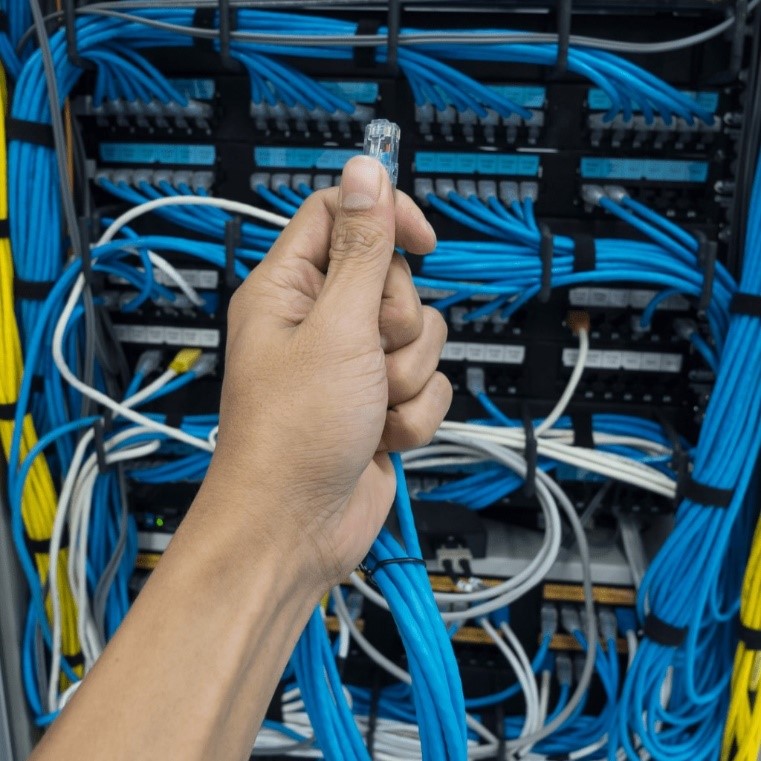
1. Entrance Facility (EF)
The Entrance Facility is the official entry point where the service provider’s cables (ISP, telecom, fiber provider) enter your building and connect to your internal network cabling. This area is critical because it is where your network transitions from “outside” to “inside.”
In Dubai buildings, this space is often controlled by building management, and it may be located in a basement telecom room, ground floor utility area, or a dedicated comms cabinet. A properly designed EF prevents future problems like grounding faults, surge damage, and weak signal handoff.
- Demarcation point (Demarc): where provider responsibility ends and building responsibility starts
- Grounding and bonding: protects equipment and reduces electrical noise
- Surge protection: helps protect network devices from spikes and lightning-related surges
- Provider handoff equipment: ONT/modem, media converters, termination boxes
2. Equipment Room (ER)
The Equipment Room is the core of your building network. This is where you typically place key infrastructure such as servers, core switches, routers, firewalls, storage systems, PBX/VoIP systems, NVRs (for CCTV), and sometimes access control controllers.
In structured cabling, the equipment room is designed for stability and growth. That means proper racks, patch panels, clean cable pathways, cooling, power backup planning, and safe access controls. A poorly built equipment room often becomes “the heat and mess problem,” where cables block airflow and devices overheat.
- Main Cross-Connect (MC): the primary termination and distribution point
- Rack and cable management: keeps everything serviceable and clean
- Power planning: dedicated circuits, UPS readiness, proper grounding
- Cooling and airflow: essential in Dubai where heat stress is higher
3. Backbone Cabling (Vertical Cabling)
Backbone cabling is the “main highway” of your structured network. It connects the entrance facility, equipment room, and telecommunications rooms (TRs) across floors and sometimes across separate buildings.
Most modern backbone cabling in Dubai uses fiber optics for speed and future scalability. In some cases, copper (Cat6A) is used for short backbone links, but fiber is preferred for higher bandwidth, longer distances, and better noise immunity.
- Connects floors, IDFs, MDFs, and critical network distribution points
- Typically uses single-mode or multimode fiber depending on distance and design
- Designed for higher capacity than typical desk-level cabling
- Should be documented and tested with proper certification
4. Telecommunications Room (TR)
A Telecommunications Room (TR) is a floor-level distribution hub. If the equipment room is the “main” network heart, the TR is the “floor-level distribution center.” Most buildings have at least one TR per floor, depending on floor size and network density.
The TR is where horizontal cabling terminates into patch panels, and where switches provide network ports for that specific floor or zone. A clean TR setup makes adds, moves, and changes easy without downtime.
- Houses patch panels, access switches, fiber terminations (if needed)
- Distributes network services to desks, meeting rooms, CCTV, and access control on that floor
- Should have proper ventilation, power, grounding, and locked access
5. Horizontal Cabling
Horizontal cabling connects the telecommunications room (TR) to the work area outlets. This is the part most people see indirectly: the RJ45 outlets at desks, meeting rooms, reception, CCTV camera points, and wireless access point locations.
The standard recommended maximum permanent link length is 90 meters. Exceeding this limit can cause unstable performance, slow speeds, PoE issues, and random disconnects especially for CCTV cameras and Wi-Fi access points.
- Common media: Cat6 / Cat6A for modern offices (Cat6A preferred for 10G and PoE headroom)
- Should be routed through trays/conduits with bend radius respected
- Must be labeled, tested, and documented for future troubleshooting
- Supports IP phones, PCs, printers, Wi-Fi APs, CCTV cameras, access control devices
6. Work Area
The Work Area is the endpoint environment where users and devices connect. This includes desks, meeting rooms, reception counters, printers, IP phones, access points, CCTV endpoints, and access control readers.
A best-practice work area setup includes properly terminated outlets, clean faceplates, clear labeling, and enough ports to support expansion. Many businesses in Dubai face the same issue: “We only installed one port per desk, and now we need more.” Structured cabling planning avoids that.
- Typically recommends at least two outlets per work area for flexibility
- Supports patch cords from outlet to device (short, replaceable, easy to maintain)
- Ideal for hot-desking, expansions, and office reshuffles
Why Choose Al Hutaib for Structured Cabling in Dubai?
Al Hutaib provides complete structured cabling solutions in Dubai, including network design, cable routing, rack setup, patch panels, fiber termination, labeling, testing, and full documentation. We focus on building cabling that stays reliable for years, not just “works today.”
Whether you are setting up a new office, expanding a warehouse, upgrading a server room, or deploying CCTV and access control systems, our engineers ensure clean installations, performance stability, and future scalability.
- End-to-end service: design, supply, install, test, and document
- Clean work: proper pathways, cable trays, labeling, and rack management
- Future-ready: planning for growth, PoE devices, and higher bandwidth needs
- Fast support: troubleshooting, repairs, and expansion (MAC) services
Contact Al Hutaib for a site assessment and a future-ready cabling plan that fits your building and your growth.
FAQs: Structured Cabling Subsystems & Installation
What are the 6 subsystems of a structured cabling system?
The six subsystems are Entrance Facility (EF), Equipment Room (ER), Backbone Cabling, Telecommunications Room (TR), Horizontal Cabling, and Work Area. Together they form a standard, organized cabling architecture used in modern buildings.
Why is the Entrance Facility (EF) important?
The EF is where service provider cables enter and connect to your internal cabling. If grounding, surge protection, or termination is done poorly, it can cause unstable network performance and equipment damage over time.
What is the difference between an Equipment Room (ER) and a Telecommunications Room (TR)?
The Equipment Room is the main network core where critical devices like routers, firewalls, servers, and core switches are placed. The TR is a floor-level distribution point that serves a specific zone using patch panels and access switches.
Why is fiber commonly used for backbone cabling?
Fiber supports higher bandwidth, longer distances, and better immunity to interference than copper. This makes it ideal for vertical risers, multi-floor buildings, and data-heavy environments.
What is the maximum recommended length for horizontal cabling?
The standard recommended maximum permanent link length is 90 meters. Exceeding this can lead to slower speeds, unstable connections, and PoE power delivery issues, especially for CCTV and Wi-Fi access points.
How many network outlets should each work area have?
Best practice is at least two outlets per work area. This supports flexibility for phones, PCs, printers, docking stations, and future changes without pulling new cables.
Why is labeling and documentation important in structured cabling?
Labeling and documentation reduce troubleshooting time dramatically. When every cable is identified, your IT team can locate faults and make changes quickly without guessing or unplugging working services.
Can structured cabling support CCTV and access control systems?
Yes. Modern CCTV and access control systems are IP-based and run on the same structured cabling infrastructure using Cat6/Cat6A and PoE switches. This simplifies installation and long-term maintenance.
How do I know if my building needs a structured cabling upgrade?
Signs include frequent network dropouts, messy cabling, limited expansion capability, poor Wi-Fi coverage, CCTV lag, or repeated issues when adding new devices. A professional site assessment can confirm the root causes.
Do you provide testing and certification after installation?
Yes. A professional structured cabling project should include testing, performance verification, labeling, and documentation so the system is reliable and audit-ready.